
Organic and Sustainable Coffee: What the Labels Really Mean
Organic, fair trade, shade-grown, sustainable — the labels pile up fast. Here is a plain-language guide to what they mean and how to buy coffee responsibly.
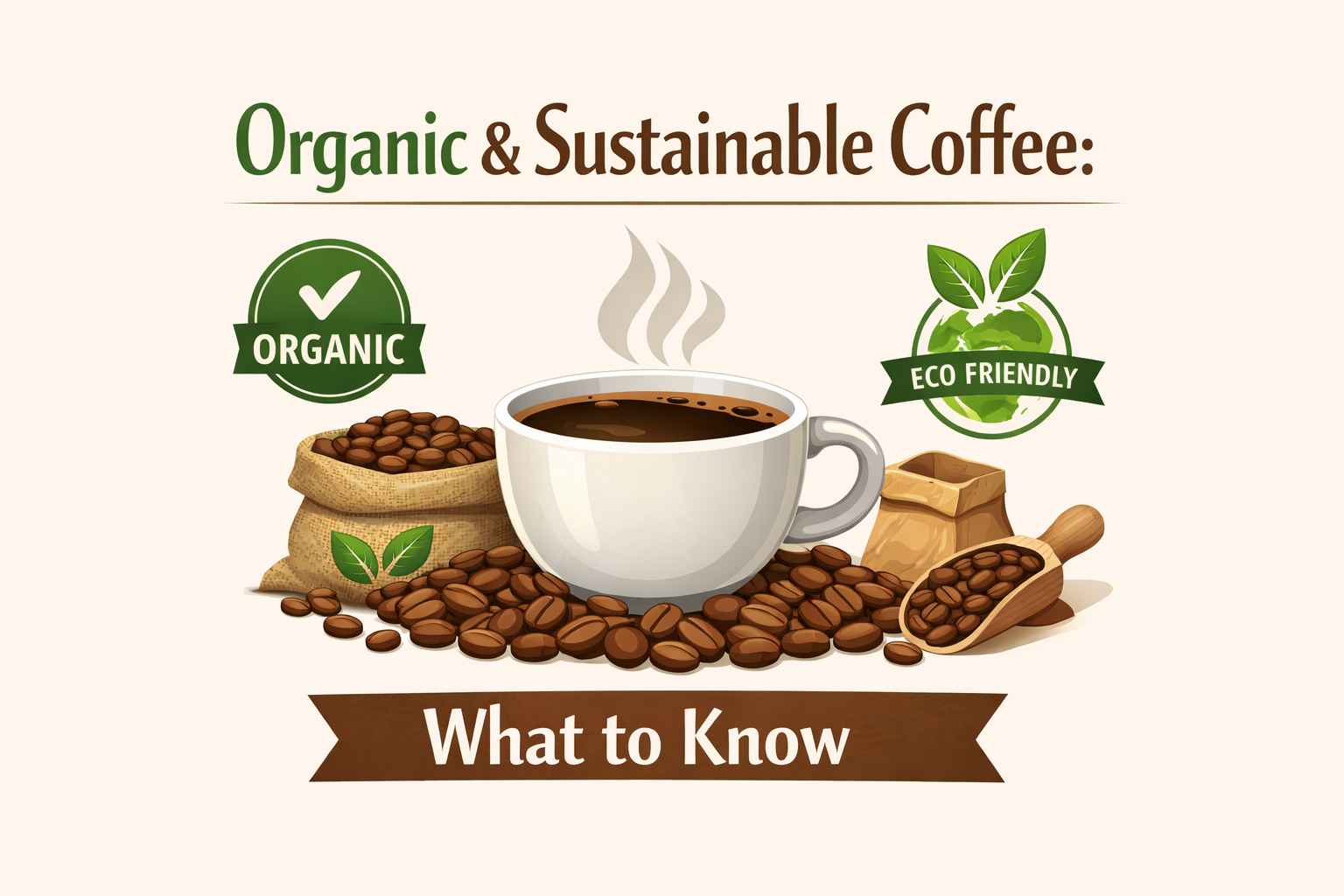
Coffee labels have grown crowded. A single bag might carry claims about being organic, fair trade, shade-grown, bird-friendly and carbon-neutral all at once. Each term means something specific, but they are easy to confuse and even easier to take on faith. Knowing what is behind the words helps you spend with confidence — and tell genuine practice from marketing.
What organic actually means
Certified organic coffee is grown without synthetic pesticides, herbicides or chemical fertilisers. Farms must follow approved practices for several years and pass inspections before they can use the label. The aim is healthier soil, cleaner water and fewer chemicals in the ecosystem and the cup.
One nuance is worth knowing: plenty of excellent coffee is grown with few or no chemicals but is not formally certified. Certification is expensive, and many small farms simply cannot afford the paperwork, even when their methods are already clean. The absence of an organic seal is not proof that a coffee was heavily sprayed.
Sustainability is bigger than organic
Organic deals mainly with chemicals. Sustainability is a wider idea that asks whether coffee can keep being produced without exhausting the land or the people who grow it. It usually covers three areas at once:
- Environmental — protecting soil, water, forests and biodiversity
- Social — fair pay, safe conditions and stable communities for farmers and workers
- Economic — prices that let farms survive and reinvest year after year
A coffee can be sustainable without being certified organic, and vice versa. The strongest farms tend to pursue both.
Decoding the common labels
A few certifications come up again and again:
- USDA Organic — grown without synthetic chemicals, independently verified
- Fair Trade — focuses on minimum prices and better terms for producers
- Rainforest Alliance — combines environmental and social standards
- Shade-grown / Bird-Friendly — coffee grown under tree canopy that preserves habitat
Shade-grown deserves special mention. Coffee evolved as a forest plant, and growing it under a canopy supports birds and wildlife, protects soil and often improves flavor by letting cherries ripen slowly — the same slow-ripening effect that high altitude provides.
Where Blue Mountain Coffee fits
Jamaica Blue Mountain Coffee is shaped by sustainability in a few natural ways. The certified region is mountainous and forested, and much of the coffee grows under shade on small family farms. Because the slopes are too steep for machinery, harvesting is done by hand — a low-impact method that also keeps quality high. The protected designation itself acts as a kind of safeguard, tying the coffee to a specific place and the communities that have farmed it for generations.
Not every Blue Mountain farm carries a formal organic seal, for the cost reasons noted above, but the traditional, small-scale, shade-and-hand approach aligns closely with sustainable principles. We focus on sourcing genuine, traceable single-origin coffee from this region; you can read more about that on our about page. Our piece on why Blue Mountain Coffee is rare also touches on the people and geography behind every harvest.
Spotting empty claims
Not every green-looking label carries real weight. Some terms are regulated and verified; others are marketing words anyone can print. A little scepticism protects your money and rewards the farms doing the genuine work:
- Vague phrases like eco-friendly or all-natural have no fixed legal meaning on coffee — treat them as decoration, not proof.
- Verified certifications such as USDA Organic or Rainforest Alliance require independent inspection, so they carry more weight.
- Specifics beat slogans — a brand that names the region, the farms and its sourcing practices is showing its work, not just its badges.
- Look for consistency — a genuine commitment usually shows up across a company's whole range, not on one hero product.
The goal is not cynicism but discernment: knowing which claims are backed by something real.
How to buy more responsibly
You do not need to memorise every seal. A few habits go a long way:
- Favor traceability — coffee that names a specific region or farm is easier to trust than a vague blend
- Buy single-origin — it usually means clearer sourcing and accountability
- Look past the front label — read how the coffee is grown, not just the badges
- Waste less — buy what you will drink fresh, and store it well so none goes stale
Sustainability starts in your own kitchen
Labels describe how coffee is grown, but some of the easiest gains happen after the bag reaches you. Coffee that goes stale and is thrown away wastes all the work that went into growing, processing and shipping it, so the most sustainable bag is often the one you finish while it still tastes good.
- Buy what you will drink. Choose a bag size you will finish within a few weeks of opening, and keep beans whole until you brew. Our guide to coffee degassing explains why ground coffee loses gas and aroma so much faster than whole beans.
- Store it well. An airtight, opaque container away from heat and light keeps coffee drinkable for longer; see coffee storage mistakes.
- Compost the grounds. The US Environmental Protection Agency lists coffee grounds and paper filters among the materials that can go into home composting, including worm bins.
- Brew only what you need. Coffee left on a hot plate turns bitter and is often poured away. Brew smaller amounts, or keep it hot in a thermal carafe or an insulated cup.
- Look after your machine. Regular cleaning and descaling keep it working efficiently and lasting longer; our guide on cleaning a coffee maker explains how.
None of these habits needs a certificate, and together they make sure the care taken on the farm is not wasted at the end of the chain.
Compare and choose
Certifications are only one part of a coffee label. Our guide to reading a coffee label covers origin, process and roast date too, and single origin vs blend coffee explains why traceability differs between the two.
Responsible coffee and great coffee are not at odds — the same care that protects land and farmers tends to produce a better cup. Explore our traceable single-origin range, from freshly roasted whole beans to everyday ground coffee, over in the shop.
Sources
Frequently Asked Questions
Is uncertified coffee always grown with chemicals?
What is the difference between organic and sustainable coffee?
Is Blue Mountain Coffee sustainable?
Can I compost used coffee grounds?
Was this helpful?
Ready to taste it?
Shop 100% authentic Jamaica Blue Mountain Coffee — whole bean, ground and pods.
Shop Coffee

0 Comments
Be the first to share your thoughts.
Leave a comment
Please sign in with your email to leave a comment.