
7 Coffee Storage Mistakes That Ruin Good Beans
Most flavor loss happens at home, not at the roaster. These seven storage mistakes quietly drain freshness from good beans, and each one is easy to fix.
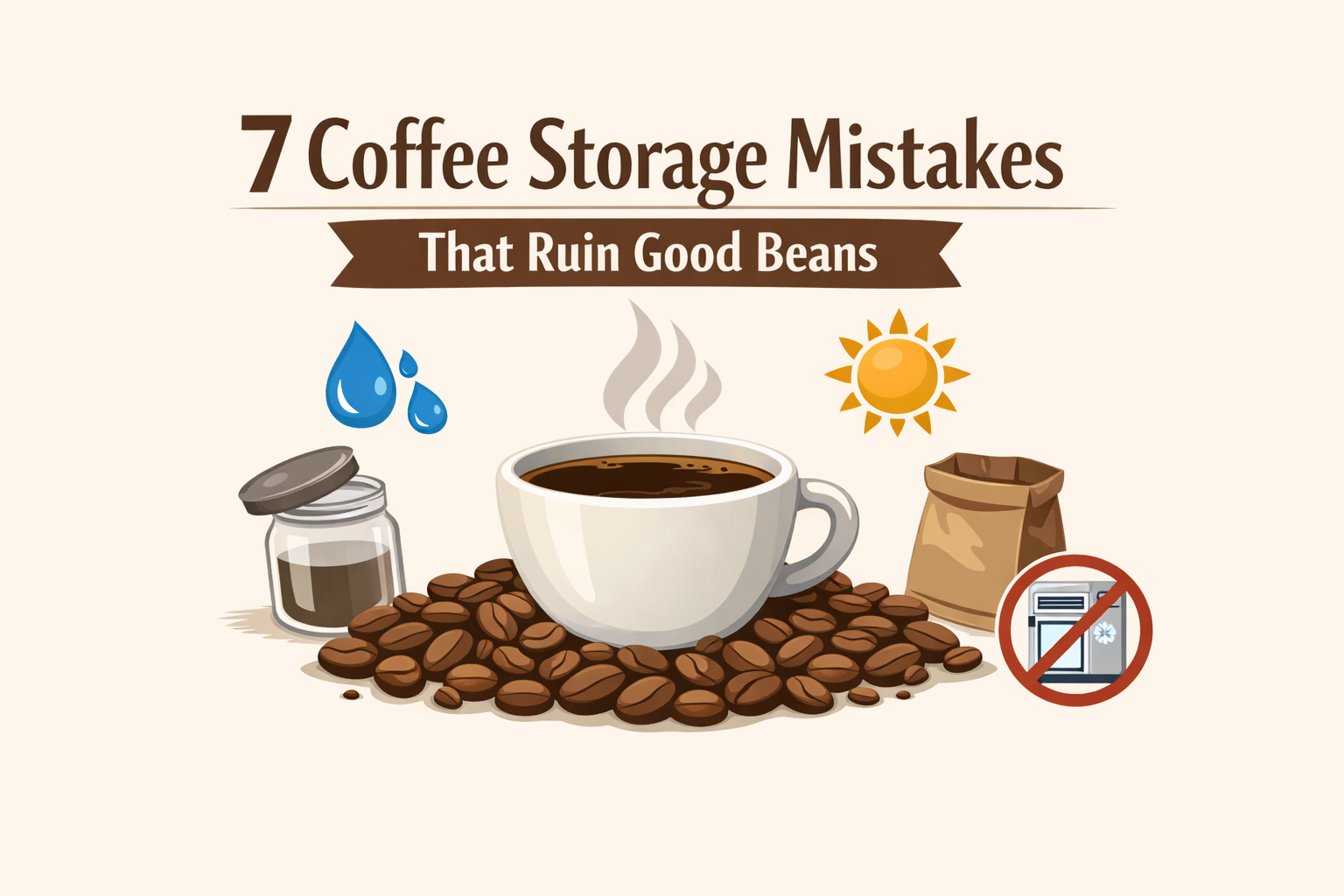
Most of the flavor people lose was lost in their own kitchen, not at the roastery. Roasted coffee is perishable, and a careless cupboard quietly drains it: oxygen oxidizes the oils, moisture invites staleness, heat drives off aroma, and light breaks down the compounds that give a cup its character. The upside is that storage is the easiest part of good coffee to get right. Sidestep these seven mistakes and a bag stays vibrant from the first cup to the last.
1. Leaving Beans in the Original Bag, Unsealed
Most retail bags are not airtight once opened, and a rolled-down top lets air creep back in. Every exposure oxidizes the oils that carry flavor. Either use a bag with a proper resealable valve or transfer the beans to an airtight container as soon as you open them. The small one-way valve you see on quality coffee bags is there for a reason: it lets the carbon dioxide from fresh roasting escape while keeping outside air from getting in. Once you cut or tear that bag open, the valve no longer protects anything, which is why a dedicated container matters from the first scoop.
2. Storing Coffee in the Fridge
A fridge is built to keep food cold and slightly damp, which is exactly wrong for coffee. The beans soak up whatever is sitting in there, and every trip in and out grows a film of condensation that works moisture down into them. The fridge is one of the worst places for coffee, despite how often it gets recommended. Picture how an open box of baking soda pulls smells out of a fridge; coffee acts the same way, only you have to drink the result. Onions, leftovers and last night's takeout all leave their mark on a porous bean.
3. Freezing Beans the Wrong Way
Freezing can preserve beans, but only if done correctly. Repeatedly opening a bag in the freezer invites the same condensation problem as the fridge. If you freeze, divide beans into small, truly airtight portions, freeze them once, and thaw a portion fully before opening it. For coffee you will finish within a few weeks, freezing is unnecessary anyway.
4. Using a Clear Container on the Counter
A glass jar of beans on the counter looks beautiful and slowly destroys your coffee. Light degrades flavor, and a sunny windowsill adds heat on top of it. Store beans in an opaque, airtight container kept in a cool, dark cupboard instead.
5. Grinding Everything at Once
Ground coffee has vastly more surface area than whole beans, so it goes stale in days rather than weeks. Grinding a whole bag in advance for convenience trades away most of the aroma you paid for. Grind only what you need for each brew, and buy whole beans when you can. Our guide to grind size covers matching the grind to your method when you do.
6. Buying More Than You Can Drink
Bulk buying feels economical, but coffee is at its best within a few weeks of roasting. A giant bag that takes two months to finish is stale by the halfway point. Buy in amounts you will actually drink while fresh, and reorder more often instead. If you prefer the convenience of pre-portioned coffee, sealed coffee pods protect each serving from air until the moment you brew.
7. Ignoring the Roast Date
A best-by date tells you little. The roast date tells you everything, because freshness is measured from the day the beans were roasted, not packed or sold. Look for a roast date, aim to use beans within about a month of it, and let them rest a few days after roasting so the gases settle before you brew.
How to Store Coffee the Right Way
The fixes are simple and they all point the same direction:
- Keep beans in an opaque, airtight container.
- Store that container somewhere cool, dark and dry, like a pantry shelf away from the oven.
- Buy whole beans and grind per brew.
- Buy in quantities you will finish within a few weeks.
- Track the roast date, not the best-by date.
How to tell whether your beans are still fresh
Even with good storage habits, it helps to know how to check freshness for yourself rather than relying only on dates. Start with your nose: freshly roasted beans smell strongly and distinctly when you open the container, while stale beans smell faint, flat or papery, and very old beans can smell rancid as their oils oxidise. Next, watch the bloom. When hot water first hits freshly ground coffee in a pour over or French press, recently roasted coffee bubbles and swells as it releases carbon dioxide; very old coffee barely moves.
The most convincing test is a side-by-side tasting. Brew a cup from your older bag and a cup from a freshly roasted one in exactly the same way, and taste them together. Stale coffee usually tastes hollow, with less sweetness and aroma and a dull, woody finish. Our guide on how to cup coffee at home shows a simple way to make the comparison fair.
If your coffee tastes flat even when it is fresh, look at the water before blaming the beans. Chlorine and very hard or very soft water both mute flavour, as explained in our guide to the best water for coffee.
Compare and choose
Storage starts at the shelf: a clear roast date is the best freshness clue on any bag, as our guide to reading a coffee label explains. Decaf beans can stale faster, a point covered in our decaf processes comparison.
Storage is half the freshness equation. The other half is what happens during brewing, so once your beans are protected, put them to work with our guide to brewing the perfect cup. When it is time to restock with beans worth storing well, browse our shop.
Frequently Asked Questions
Should I store coffee beans in the fridge or freezer?
What is the best container for storing coffee?
How long do coffee beans stay fresh?
How can I tell if coffee beans have gone stale?
Was this helpful?
Ready to taste it?
Shop 100% authentic Jamaica Blue Mountain Coffee — whole bean, ground and pods.
Shop Coffee


0 Comments
Be the first to share your thoughts.
Leave a comment
Please sign in with your email to leave a comment.