
Coffee Tasting Notes Explained for Beginners
Body, acidity, aroma, finish — coffee tasting language sounds intimidating until you break it down. Here is a beginner's guide to tasting what is really in your cup.

Read the back of a coffee bag and you might find words like bright, syrupy, stone fruit or clean finish. To a newcomer it can sound like wine-snob theatre. It is not. Tasting notes are simply a shared vocabulary for things your palate already detects but may not have names for. Once you learn a handful of terms, every cup becomes more interesting — and choosing your next bag gets much easier.
The four things every taster checks
Professional cuppers judge coffee on a few core dimensions. You can use the same ones at your kitchen table.
- Aroma — what you smell before and during the sip. Smell carries most of what we call flavor, so always take a moment to breathe in the cup first.
- Acidity — not sourness, but the lively, sparkling quality that makes a coffee feel fresh. High acidity reads as bright and citrusy; low acidity reads as smooth and round.
- Body — the weight and texture in your mouth. Light body feels tea-like; full body feels syrupy or creamy.
- Finish — the aftertaste, and how long it lasts. A clean finish fades pleasantly; a harsh one turns dry or bitter.
Run through those four every time and you will already taste more than most casual drinkers.
A beginner's flavor vocabulary
Flavor notes describe what a coffee reminds you of — not ingredients added to it. A coffee that tastes of blueberry has no fruit in it; the bean simply produces compounds your brain links to blueberry. This table groups the most common notes you will meet.
| Family | Common notes | Often found in |
|---|---|---|
| Fruity | Berry, citrus, stone fruit, apple | Bright, high-grown African and washed coffees |
| Nutty / Chocolatey | Almond, hazelnut, cocoa, dark chocolate | Smooth Central American and Caribbean coffees |
| Sweet | Caramel, brown sugar, honey, maple | Well-balanced medium roasts |
| Floral / Herbal | Jasmine, tea, fresh herbs | Delicate, high-altitude beans |
| Roasty | Toast, smoke, dark cocoa, spice | Darker roasts |
How to actually taste a cup
You do not need special gear. You do need to slow down.
- Brew a cup and let it cool slightly — scalding coffee hides flavor.
- Smell it first, with your nose right over the cup.
- Take a generous sip and let it spread across your whole tongue.
- Ask the four questions: how does it smell, how bright is it, how heavy is the body, how does the finish behave?
- Try it black at least once. Milk and sugar are fine, but they mask the very notes you are learning to find.
Mistakes that hide flavor
If a coffee tastes flat or muddled, the problem is often the setup rather than the bean. A few habits quietly flatten what you taste:
- Drinking it too hot — heat numbs the tongue and masks subtle notes; let the cup cool for a minute or two.
- Stale or pre-ground coffee — aromatics fade within minutes of grinding, so much of the flavor is gone before you brew.
- Bad water — coffee is mostly water, and heavily chlorinated tap water dulls everything. Filtered water makes an honest difference.
- Rushing — the notes are there, but they reveal themselves to an attentive sip, not a gulp on the move.
Fix those and a coffee you thought was ordinary can suddenly open up.
Why single-origin coffee teaches you faster
Blends are built for consistency, which can flatten the distinctive notes. A single-origin coffee comes from one place and shows its character clearly, so it makes a far better teacher. Jamaica Blue Mountain is a good example: a clean, smooth cup with cocoa, toasted nut and brown-sugar notes and very low acidity. Tasting it next to a bright, fruity coffee is the quickest way to feel what acidity and body really mean. Our guide to why Blue Mountain Coffee is rare explains where that distinctive profile comes from.
Put it into practice
The fastest progress comes from grinding fresh, since ground coffee loses aromatics quickly. Start with whole beans and a simple grinder, or keep things easy with ready-ground coffee while you practice. For the cleanest results, follow our brewing guide so technique is not getting in the way of flavor.
Train your palate with a side-by-side tasting
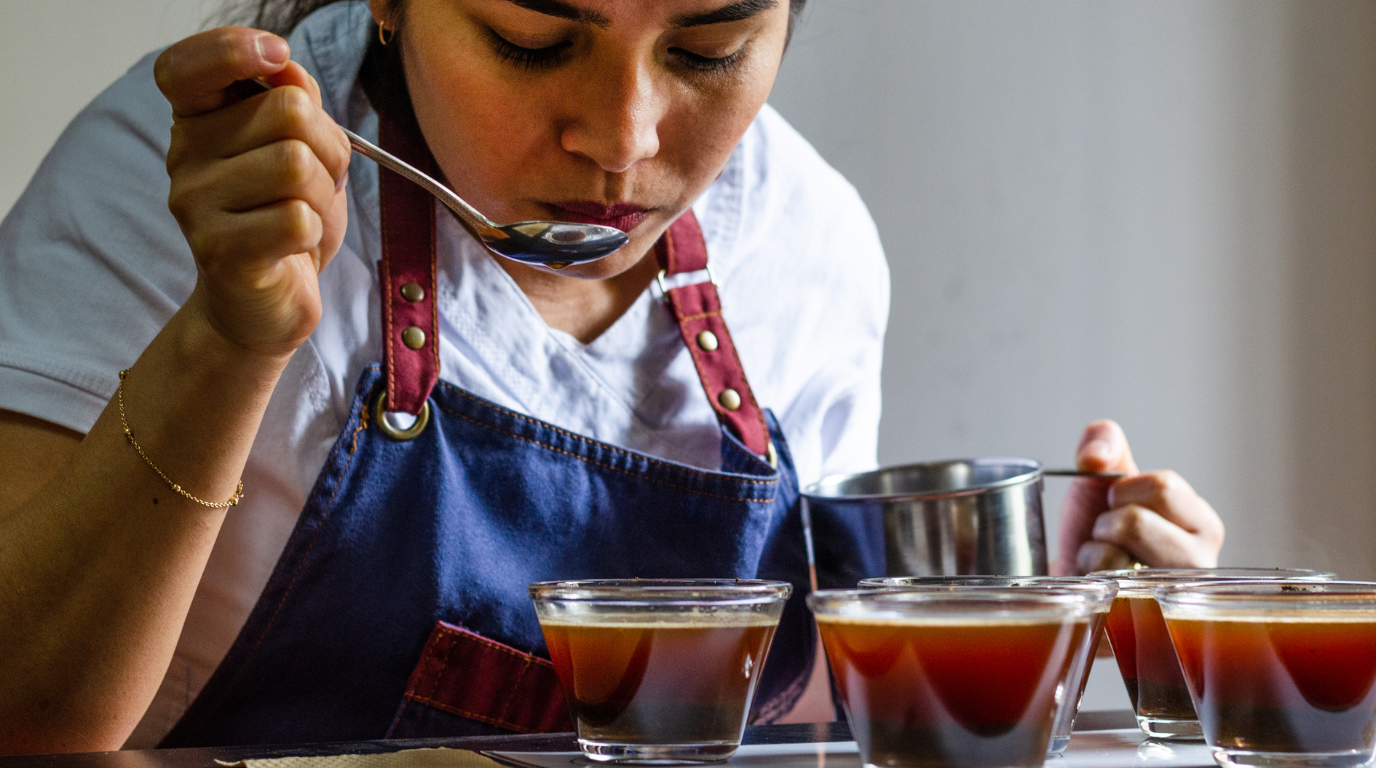
Tasting notes are much easier to understand when you taste two coffees together rather than one on its own. On its own, a cup simply tastes like coffee; next to a contrasting cup, the differences jump out, and words such as bright, round, floral or chocolatey suddenly make sense. Professionals do this through cupping, a standard method in which every coffee is brewed in the same way so that only the beans differ. You can use a simplified version at home with a scale, matching cups and a soup spoon, as explained in how to cup coffee at home.
Start with a pair that differs in an obvious way. A washed Ethiopian Yirgacheffe and a Jamaica Blue Mountain are a classic contrast: one floral and citrusy with a light, tea-like body, the other mild, balanced and smooth. Our Blue Mountain vs Ethiopian Yirgacheffe comparison describes what to expect from each. Taste both hot, then again as they cool, and write down one word for aroma, acidity, body and finish each time. After a few sessions you will find that the notes on a bag begin to predict what you taste.
Water matters here too. Chlorinated or very hard water masks delicate notes, so use filtered water for tasting sessions; our guide to the best water for coffee explains why.
Compare and choose
Tasting notes become easier to predict once you know what shapes them. See washed vs natural vs honey coffee for processing, arabica varieties compared for plant type, and SCA grading explained for how professional cuppers score flavour.
There is no test to pass here. The goal is simply to drink more attentively, and the reward is a cup that gets richer the more you pay attention. Explore beans to compare over in the shop.
Frequently Asked Questions
Are coffee tasting notes added flavors?
What is the difference between acidity and sourness?
What is the easiest way to start tasting coffee?
How can I get better at tasting coffee?
Was this helpful?
Ready to taste it?
Shop 100% authentic Jamaica Blue Mountain Coffee — whole bean, ground and pods.
Shop Coffee

0 Comments
Be the first to share your thoughts.
Leave a comment
Please sign in with your email to leave a comment.