
Decaf vs Regular Coffee: What's the Difference?
The real differences between decaf and regular coffee, from caffeine content to flavor, explained clearly so you can choose what fits your day.
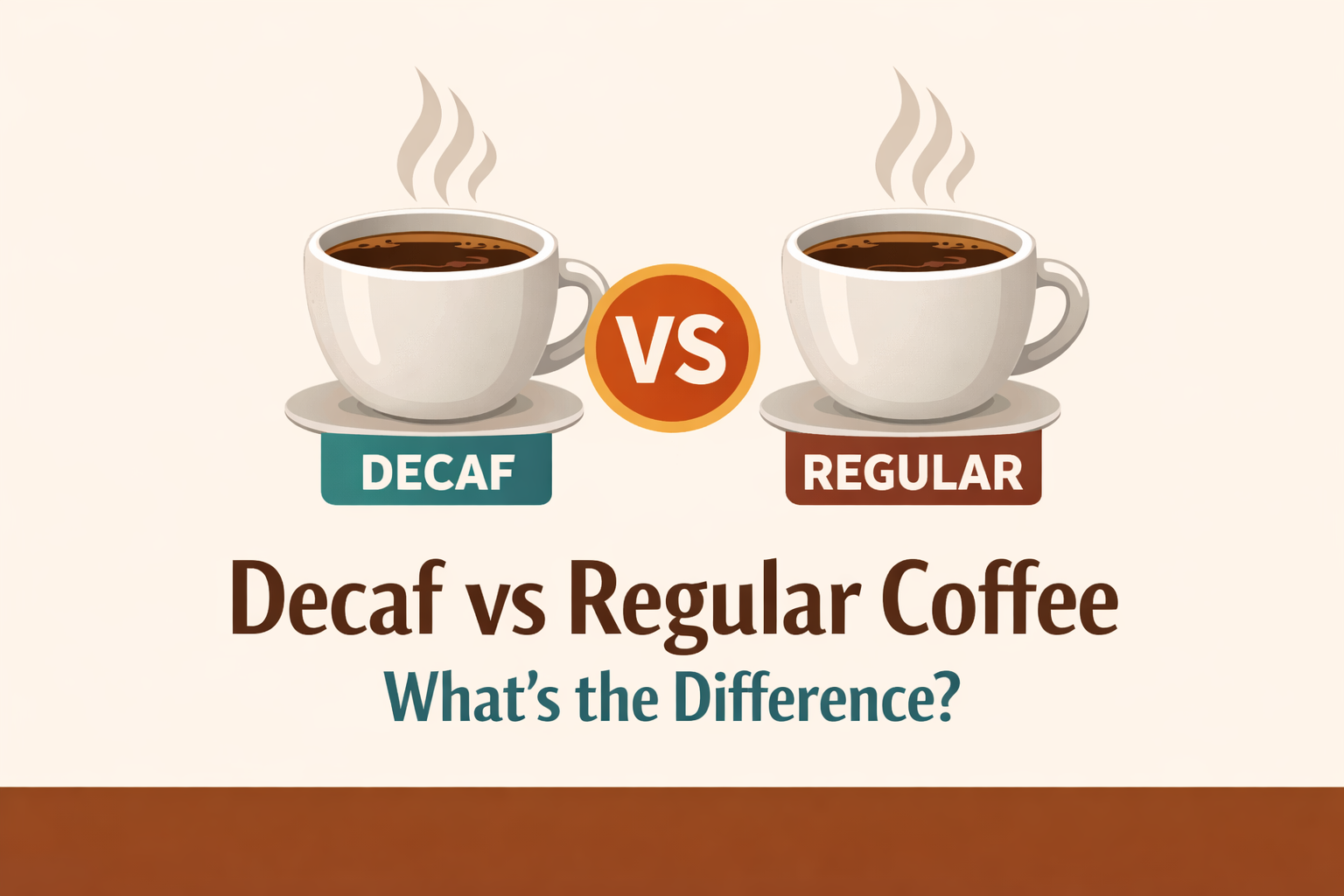
Decaf and regular coffee start as the same plant and end up in the same mug, yet the choice between them shapes how a cup fits into your day. The differences are smaller than many people assume and larger than others expect. Here is a clear, honest comparison, with no health claims and no hype, so you can pick the cup that suits you.
The one real difference: caffeine
The defining gap is caffeine content. A standard 8 oz cup of regular brewed arabica coffee contains roughly 80 to 120 mg of caffeine, though the exact amount varies with the bean, the roast, the grind and how it is brewed. Stronger brewing and larger cups push it higher.
Decaf is not caffeine-free. The decaffeination process removes most of the caffeine, but a small amount remains, commonly just a few milligrams per cup. So decaf is best described as very low caffeine rather than none at all. For most people the difference is meaningful, but if you are highly sensitive, that residual trace is worth knowing about.
How decaf is actually made
Decaffeination happens to green, unroasted beans before they are roasted. Several methods exist, but they share the same goal: draw the caffeine out of the bean while leaving as much flavor behind as possible.
- Water-based methods soak the beans and use water, sometimes with a carbon filter, to carry caffeine away. These are popular with drinkers who want a chemical-free description on the bag.
- Solvent-based methods use a food-safe solvent to bind and remove caffeine, after which the beans are thoroughly washed and dried.
- Carbon dioxide methods use pressurized CO2 to extract caffeine selectively.
Each approach removes the great majority of caffeine. The differences mostly come down to cost and how gently the bean's flavor is preserved.
Does decaf taste different?
Honestly, a little. The decaffeination step can soften some of the aromatic compounds that give coffee its brightness and depth, so decaf has historically had a reputation for tasting flatter. That reputation is increasingly out of date. Modern methods and good beans produce decaf that is genuinely enjoyable, and the quality of the underlying coffee matters enormously. A decaf made from an excellent bean and roasted well beats a careless regular coffee every time.
With a refined, naturally smooth coffee like Blue Mountain, the baseline is already high. If you want to understand the flavor you are starting from, our note on how Blue Mountain tastes sets the scene.
A quick side-by-side
| Regular | Decaf | |
|---|---|---|
| Caffeine per 8 oz | About 80 to 120 mg | A few mg (very low) |
| Made from | Standard roasted beans | Beans decaffeinated before roasting |
| Typical use | Mornings, a daytime lift | Evenings, sensitive drinkers |
What about cost and shelf life? Two practical questions come up often. On price, decaf can cost a little more than regular from the same source, because the extra decaffeination step adds work before the beans are even roasted. The gap is usually modest. On freshness, decaf and regular behave much the same once roasted: both are perishable, both taste best within a few weeks of opening, and both keep longest as whole beans stored airtight, cool and dark. In other words, the storage habits that protect a regular bag protect a decaf one just as well, so you do not need a separate routine for each.
Which should you choose?
There is no universally right answer. It comes down to how caffeine fits your life.
- Reach for regular when you want the alertness coffee is known for, especially earlier in the day.
- Reach for decaf when you love the ritual and flavor of coffee but want to drink it in the evening, or when you are cutting back on caffeine and do not want to give up the cup.
- Mix both across the day. Many people drink regular in the morning and switch to decaf after midday, keeping the habit without the late caffeine.
Caffeine affects everyone differently, and how much suits you is personal. If you have specific health questions, a doctor is the right person to ask. What we can say with confidence is that the quality of the bean shapes your cup more than the decaf label does.
Compare and choose
For a deeper look at each decaffeination method, including Swiss Water, CO2, sugarcane and solvent processes and the rules that govern them, read our decaf coffee processes comparison. Our guide to reading a coffee label shows where the method appears on a bag.
Brewing either one well
Whichever you choose, good brewing makes the difference. Mind your ratio, use water just off the boil, and grind fresh if you can. Our brewing guide covers the details that turn good beans into a great cup. Keeping a brew hot longer helps too, which is where an insulated cup earns its place. When you are ready to choose your beans, the full selection is the place to begin, and our FAQ answers the smaller questions.
Frequently Asked Questions
How much caffeine is in regular coffee versus decaf?
Does decaf coffee taste worse than regular?
Is decaf completely caffeine-free?
Was this helpful?
Ready to taste it?
Shop 100% authentic Jamaica Blue Mountain Coffee — whole bean, ground and pods.
Shop Coffee

0 Comments
Be the first to share your thoughts.
Leave a comment
Please sign in with your email to leave a comment.