
Peaberry Coffee vs Regular Beans: What Is the Difference?
Peaberry beans are round, sorted by hand and machine, and sold as their own grade. Here is what makes them different and when they are worth choosing.
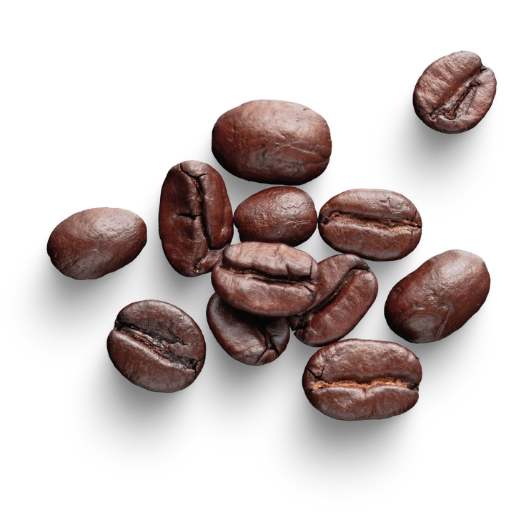
Look closely at a bag of peaberry coffee and the beans look different: small, rounded and almost pebble-like instead of flat on one side. Peaberries appear on labels from Jamaica, Hawaii, Kenya, Tanzania and elsewhere, often sold as a separate grade. This guide explains what a peaberry is, how it is sorted and graded in different origins, what it can and cannot tell you about flavour, and how to decide whether to buy one.
What a peaberry is
A coffee cherry normally holds two seeds that grow face to face, which is why a typical coffee bean has one flat side with a groove down the middle and one rounded side. Occasionally only one seed develops inside the cherry. With no partner to press against, that single seed grows into a rounder, oval shape. This is a peaberry. In Spanish-speaking origins it is often called caracol or caracolillo, meaning little snail, after its curled shape.
Peaberries are not a variety or a separate plant. They occur naturally in arabica and robusta alike, scattered among normal beans on the same trees, and they make up only a small share of any harvest. That is why they have to be separated after processing if they are to be sold on their own.
How peaberries are sorted
After processing and hulling, green coffee is sorted by size, shape and density. Flat beans and round peaberries behave differently on screens and sorting tables, so mills can separate them, and the peaberry fraction is then checked by hand for defects. Because the volume is small and the work is extra, a peaberry lot is a deliberate selection rather than an accident of the harvest. Our guide to coffee bean screen sizes explains how this sorting fits into grading in general.
How different origins grade peaberry
Each producing country decides how peaberries fit into its grading system, which is why the same word appears with different meanings on labels.
| Origin | Who sets the rules | How peaberry appears |
|---|---|---|
| Jamaica Blue Mountain | Jamaica Agricultural Commodities Regulatory Authority (JACRA) | Peaberry is graded separately alongside Blue Mountain No. 1, No. 2 and No. 3 |
| Kona, Hawaii | Hawaii Department of Agriculture | Separate peaberry grades sit beside Extra Fancy, Fancy, No. 1, Select and Prime |
| Kenya | Coffee Directorate, Agriculture and Food Authority | PB is a grade of its own beside the size grades AA and AB |
| Papua New Guinea | Coffee Industry Corporation | The old PB grade was folded into the new A grade when standards were simplified in 2020 |
The Papua New Guinea example is a useful reminder that grades describe sorting and trade conventions, not a fixed property of the coffee. When PNG simplified its arabica grades, it merged several old size and shape grades, including PB, into a single A grade because their cup qualities were similar. Our comparison of Papua New Guinea coffee and Jamaica Blue Mountain covers that change in more detail.
Does peaberry taste different?
This is where marketing tends to run ahead of evidence. Peaberries are often described as sweeter, brighter or more concentrated than flat beans from the same farm, and some tasters do prefer them. But there is no rule that a peaberry lot will taste better, and published grading systems treat peaberry as a shape category, not a quality score. A peaberry from an average farm will not outperform a carefully produced flat-bean lot from an excellent one.
What a peaberry lot does give you is uniformity. Because the beans are similar in shape and size, they can roast evenly, and a well-sorted lot tends to have few defects. Some roasters adjust their roast profile for the rounder shape, which can roll more freely in the drum. If you want a fair test, compare a peaberry and a flat-bean lot from the same farm and harvest, roasted the same way, and decide with your own palate. Our guide to coffee tasting notes helps you describe the differences.
Peaberry and specialty scores
Specialty coffee scoring judges the cup, not the bean shape. Under the Specialty Coffee Association's protocols, a peaberry lot is cupped and assessed like any other coffee. If a seller quotes a cupping score, that number tells you more about expected quality than the word peaberry does. Our explainer on SCA specialty grading shows how those scores work.
Brewing peaberry coffee
Peaberries brew like any other beans of the same origin and roast. Grind to suit your method and adjust by taste: if the cup is sour or thin, grind a little finer; if it is bitter or harsh, go coarser. Because peaberry lots are usually sold as single origins with distinctive character, they are well suited to pour over or a well-tuned drip machine, where clarity comes through. See our brewing guide for ratios and technique.
Reading a peaberry label
- Check the origin first. "Peaberry" says nothing about where the coffee is from. A Kona peaberry, a Jamaica Blue Mountain peaberry and a Tanzanian peaberry are entirely different coffees.
- Look for the full grade. For Kona, look for 100% Kona and the peaberry grade; for Jamaica, look for certified Jamaica Blue Mountain. Our comparison of Blue Mountain vs Kona explains both systems.
- Watch for blends. A small percentage of a famous peaberry in a blend is still a blend.
- Check the roast date. Freshness matters more than shape. Our guide to reading a coffee label shows where to find it.
Should you choose peaberry?
Choose peaberry if you enjoy exploring how sorting and grading affect a coffee you already like, or if you want a uniform, carefully selected lot from a favourite origin. Skip it if you are simply looking for the best-tasting coffee for the money; grade by grade, the farm, processing, roast and freshness will matter more. If you are starting with Jamaica Blue Mountain, our whole bean coffee is a good way to learn the origin's style before comparing grades.
Sources
- Jamaica Agricultural Commodities Regulatory Authority (JACRA)
- Hawaii Department of Agriculture: coffee grading and labelling
- Coffee Directorate, Agriculture and Food Authority, Kenya
- Daily Coffee News: new green coffee grading standards from Papua New Guinea (Coffee Industry Corporation)
- Specialty Coffee Association: coffee standards
Frequently Asked Questions
What is a peaberry coffee bean?
Is peaberry coffee better than regular coffee?
Is there a Jamaica Blue Mountain peaberry?
Was this helpful?
Ready to taste it?
Shop 100% authentic Jamaica Blue Mountain Coffee — whole bean, ground and pods.
Shop Coffee

0 Comments
Be the first to share your thoughts.
Leave a comment
Please sign in with your email to leave a comment.